

Takeaways from the Urban Science x Better Car People podcast
Artificial intelligence is quickly becoming a standard part of the automotive retail experience. From website chat and automated lead response to sales tracking and customer follow-up, AI is helping dealers move faster and manage more activity with fewer manual steps. But while the technology can create efficiencies, it doesn’t automatically create better outcomes.
AI needs to be optimized to work within each dealership’s unique footprint, so sales processes are supported (not replaced) and customers interact with minimal friction. Therefore, AI success requires alignment with the people, processes and data that already drive successful retail operations.
AI Should Support the Sales Team, Not Replace It
One of the biggest misconceptions about AI is that it can serve as an “easy button” for customer engagement. Dealers may expect AI to handle every interaction until a shopper is ready to speak with a person. In practice, that approach can create gaps between what the customer needs and what the dealership delivers.
AI is best positioned as a support system for dealership teams. This includes:
- Responding quickly to initial inquiries
- Asking basic discovery questions
- Identifying preferred communication channels
- Helping nurture shoppers who are earlier in the buying journey
These automated tasks give salespeople more time to focus on high-value conversations, relationship building and in-store experiences that still depend on human trust and judgment.
The most effective models work alongside people with clear rules for when automation should engage, when a salesperson should step in and how information should carry forward across the journey.
The Handoff Is Where Customer Trust is Won or Lost
One of the most important parts of an AI-supported sales process is the transition from automated engagement to human follow-up. If a shopper shares information through an AI assistant and then has to repeat the same details to a salesperson, the dealership loses the benefit of the technology and risks damaging the relationship.
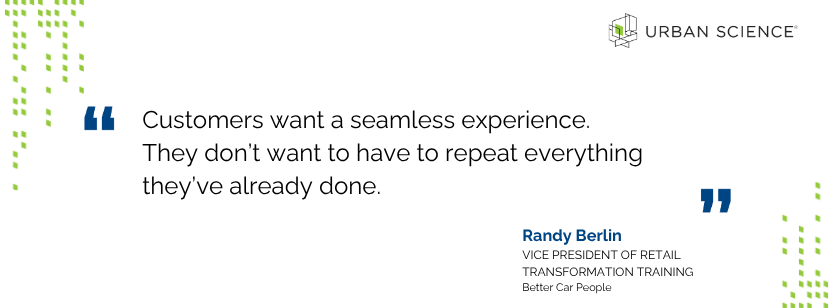
A strong handoff depends on process clarity. Everyone in the dealership should understand how AI is being used, what information it collects and who is responsible for the next step. CRM notes should reflect customer preferences, prior questions and where the shopper appears to be in the buying journey. That context allows the salesperson to pick up the conversation with confidence instead of restarting it.
Transparency also matters. If customers believe they are communicating with a person when they are actually interacting with AI, the dealership risks undermining trust. Being clear about when AI is involved, while still providing a smooth path to a human, helps set expectations and reinforce credibility.
Better Inputs Create Better AI Outcomes
AI becomes more valuable when it is supported by timely, accurate insight into real customer behavior. Without that visibility, automated workflows can continue pursuing leads who already bought elsewhere, apply the same cadence to every shopper or miss the moments when a different message is needed.
Defection intelligence helps close that gap by showing dealers which leads purchased from another same-brand or competitive store, when those purchases occurred and where defection patterns are emerging. Tools such as SalesAlert™ 和 TrafficView™ can help managers identify whether losses are tied to lead source performance, salesperson, follow up timing, vehicle availability or broader process or marketing issues. That intelligence can then inform how AI engages different customers.
Some real-world examples include:
- A lead source that typically converts later in the buying journey may require a longer nurturing cadence.
- An individual lead who purchased elsewhere should exit active sales outreach and shift into service-focused communication.
- A recurring pattern of unanswered questions may point to training needs, script changes or implementation of AI.
Communication Quality Still Drives the Relationship
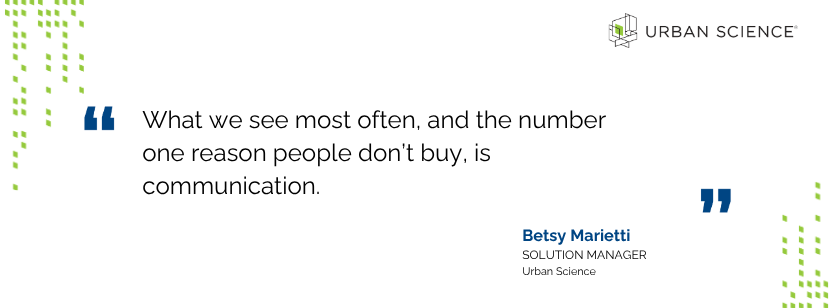
AI can help dealers respond faster, but speed alone is not enough. Customers still expect clear answers, relevant information and communication that reflects where they are in the decision process. Urban Science’s piloted Defection Survey found that communication was the biggest driver of defection, not the usual assumption of price. Repetitive outreach or generic messaging can make a dealership appear disconnected, even when the intention is to be responsive.
Dealers can use AI to improve communication by asking better first-touch questions:
- How does the customer prefer to communicate?
- Are they still researching or ready to buy?
- What information would help them move forward?
The answers to these questions can help shape more relevant follow-up and give salespeople the context they need to build stronger relationships. Moreover, human connection remains essential. A personalized video confirming a vehicle is available, a timely phone call that answers a specific question or a thoughtful message acknowledging a shopper’s preferences can differentiate one dealership from another. AI can support those moments, but it should not replace them.
Lost Sales Can Still Lead to Future Opportunity
A lost vehicle sale doesn’t have to mean the end of the customer relationship. Defection insights help dealers adjust their engagement strategy and identify opportunities to reconnect. With defection data integrated into CRM and marketing automation platforms, dealerships can automatically shift customers into more relevant service-focused campaigns while allowing sales teams to focus on active shoppers.
Service has proven to be a valuable re-entry point. Customers who return for maintenance are 2-2.5x more likely to consider that dealership when they re-enter the market, creating opportunities to rebuild trust and strengthen the service-to-sales loyalty loop. Rather than viewing a defection as a closed opportunity, dealers can use these insights to support long-term customer retention and future sales.
Turning AI Into a Repeatable Dealership Discipline
Optimizing AI requires a consistent operating rhythm. Dealers should regularly review where leads are converting, where they are defecting and how customer communication is performing. Those insights should inform coaching, workflow adjustments and AI training so the system improves over time.
Four principles can help guide that effort:
- Visibility: Understand what is happening to each lead after it enters the CRM.
- Precision: Focus follow-up on customers who are still in market and influenceable.
- Timing: Align outreach with where shoppers are in the buying journey.
- Enablement: Train both AI and dealership teams to act consistently across channels.
AI has the potential to strengthen dealership performance, but only when it is connected to the right strategy. Dealers that pair automation with timely data, clear processes and well-trained people will be better positioned to deliver the experiences customers expect and the outcomes the business needs.
点击 这里 to listen to our podcast with Betsy Marietti, Solution Manager at Urban Science and Randy Berlin, Vice President of Retail Transformation Training at Better Car People.
Summary
AI can help dealerships respond faster, streamline follow-up and strengthen customer engagement, but its success depends on how well it works alongside people, processes and data. By pairing AI with timely sales and defection insights, clear human handoffs and personalized communication, dealers can focus their teams on active opportunities, improve the customer experience and build stronger long-term relationships.
FAQ
- How can dealerships use AI in the sales process? Dealerships can use AI to support tasks such as responding to initial inquiries, asking discovery questions, identifying communication preferences and nurturing customers who are earlier in the buying journey. AI should complement sales teams by reducing repetitive work while allowing salespeople to focus on relationship building and high-value customer interactions.
- Should AI replace dealership salespeople? No. AI works best as a support system for dealership teams. Dealers should establish clear rules for when AI engages with a customer, when a salesperson takes over and how customer information moves between automated and human interactions.
- How can dealerships improve the handoff from AI to a salesperson? Dealerships should ensure customer information collected through AI carries into the CRM and is accessible to the salesperson. Notes should include communication preferences, previous questions and relevant context about the shopper’s buying journey. A seamless handoff helps prevent customers from having to repeat information and creates a more consistent experience.
- Why does data quality matter when using AI in automotive retail? AI relies on the information available to determine how and when to engage customers. Timely, accurate sales and defection intelligence can help dealerships identify customers who remain in market, remove customers who already purchased elsewhere from active sales outreach and recognize patterns affecting conversion.
- What role does communication play in dealership customer defection? Communication can play a significant role in whether a shopper ultimately purchases from a dealership. Urban Science’s piloted defection survey found communication was the biggest driver of defection, rather than the commonly assumed factor of price. AI can help dealers improve communication by identifying customer preferences and needs, but personalized human interactions remain important.
- Can service help dealerships win back customers who defected? Yes. Service can provide an important opportunity to rebuild the relationship. Customers who return to a dealership for maintenance are 2 to 2.5 times more likely to consider the dealership when they return to the vehicle market, making service an important part of the long-term customer loyalty strategy.
